In my info bubble over the past month, everyone's been building a second brain in Obsidian using Karpathy's method and talking about how it boosts agent efficiency. Read the gist, reformatted the vault, connected Claude.
Channel with guides and content on Claude Code, we post news (when they cut limits by 10x) and what tools we implement through Claude for projects, channel: https://t.me/claudedevolper
But almost no one stops to ask: who exactly is this system being built for—an agent or yourself? And is there even a difference.

Obsidian has been around since 2020. Niklas Luhmann's "Zettelkasten" method (German for "box of cards")—since the 1950s. Tiago Forte's book "Second Brain" came out in 2022.
People have long tried to build a system that helps you think. But it died for almost everyone. The reason is simple: such a system starts paying off in years, but costs—every day. Too long to break even. Too high a cost to maintain.
In 2026, that changed.
After one gist from Andrej Karpathy, thousands of people started building a "second brain for LLM". Markdown files, cross-links, structured notes—a way to give the model context. AI removed the main barrier: maintenance cost nearly went to zero. What used to take an hour a day now takes minutes.
But along with this, the goal quietly shifted. Before, the second brain was built as a thinking tool. Now—as infrastructure for an agent. And these are two different scenarios.
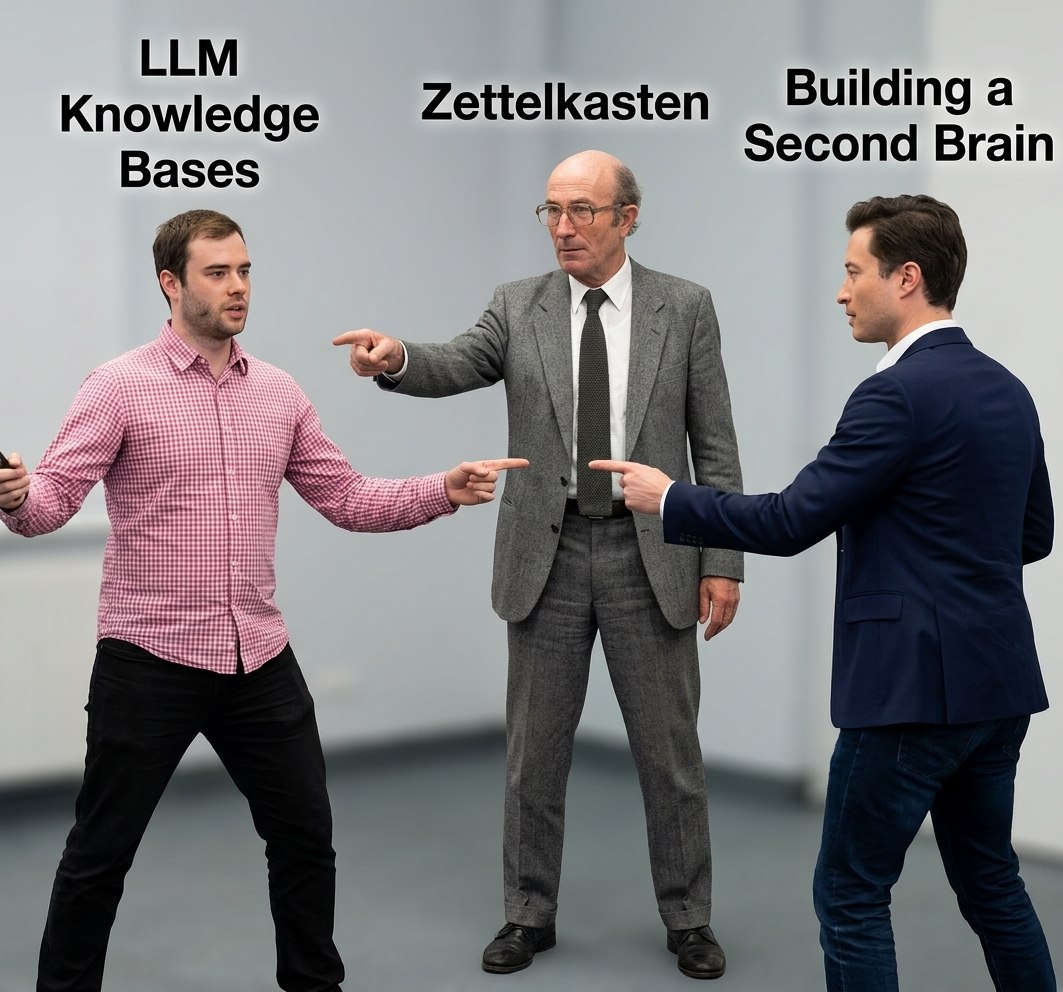
What the Data Shows
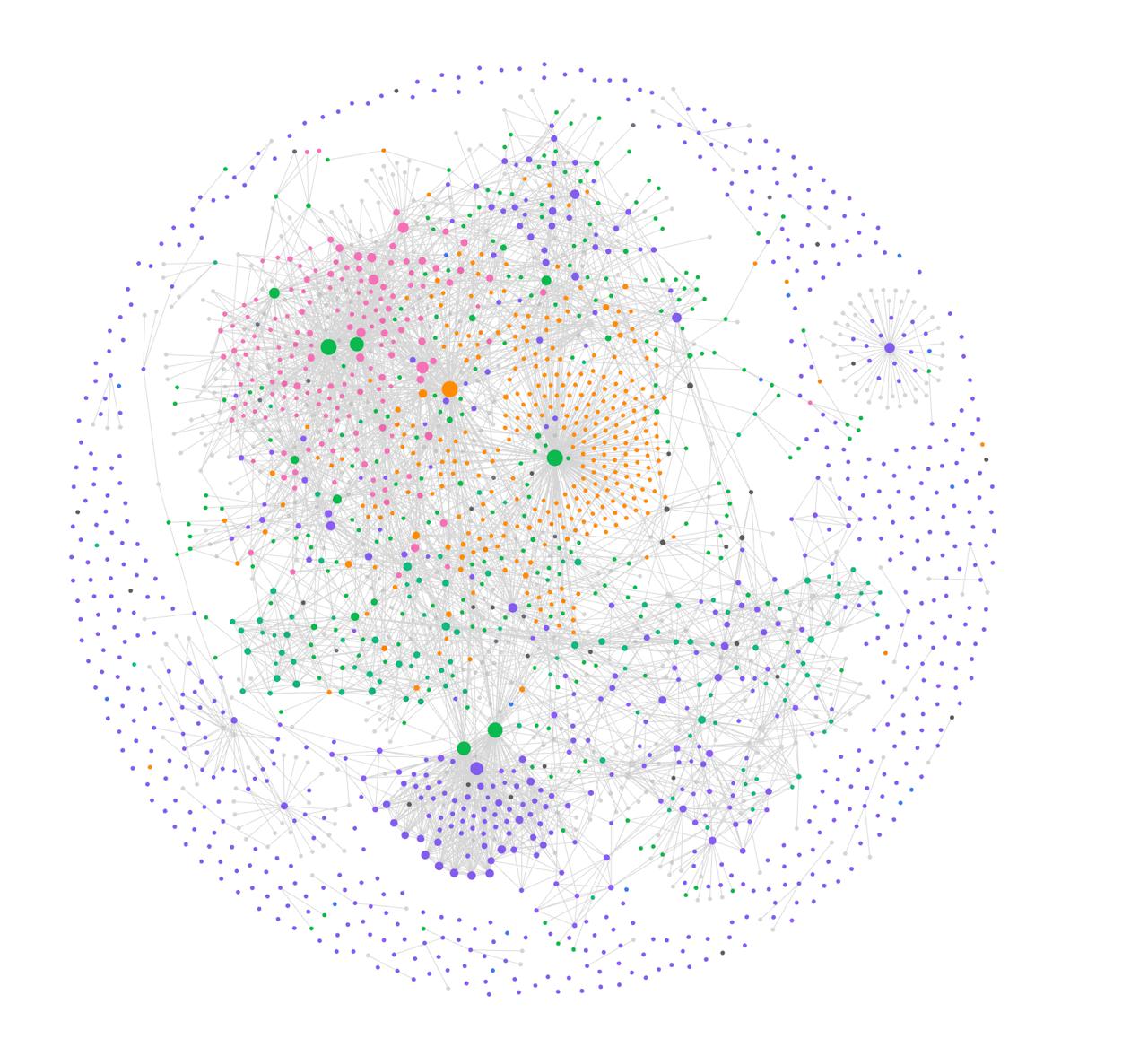
Interest in Obsidian and PKM grew steadily over the past six years—and exploded in 2026. Claude and I analyzed 375 publications and 356 videos from 2020–2026. There were 7 publications in 2020, 82 in 2025, 160 in just the first four months of 2026. On YouTube—the same picture: 9 videos in 2020, 110 in 2025, 118 in the first four months of 2026.
After Karpathy's tweet, growth became vertical. The tag karpathy_llm_wiki didn't exist on GitHub until April 2026—now 594 repositories. obsidian_agent grew from 2 repositories in 2021 to 947 now—×473 over five years. obsidian_zettelkasten grew 5x over the same period.
Full research with methodology and data—link.
I tried to build such a system twice.
The first time—when Notion was leaving Russia, and I realized my notes lived on someone else's server and didn't belong to me. I exported everything, tried to move it to Obsidian—and drowned in manual work. The system fell apart before it even started working.
The second time—from scratch. Lasted longer. Gave up for the same reason: too expensive to maintain.
In February 2026, I came back—this time with agents. And suddenly everything worked. Transcription, structuring, linking—the model does all of it now. The system stopped requiring effort.
But that's exactly when I noticed something had changed.
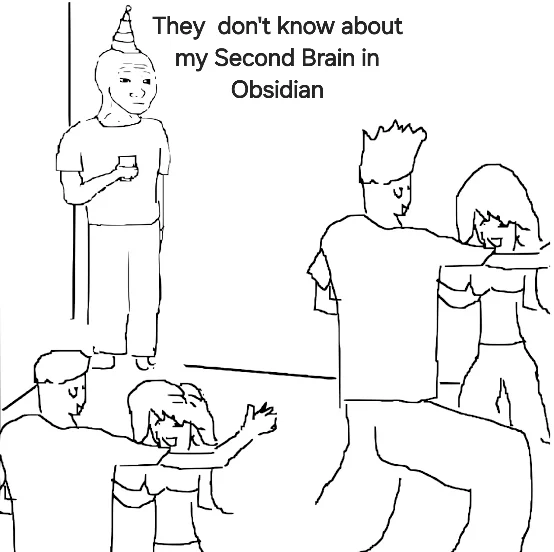
These Are Two Different Tools. It's Dangerous to Mix Them
When people say "second brain for agents"—they mean a context management system. Structured files, facts, formats that a model can read and update. It's infrastructure—it works now, for the current task.
When people say "second brain" in the classical sense—they mean something different.
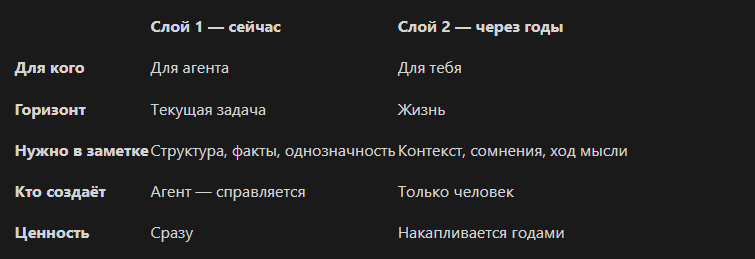
The problem isn't that you keep them in the same vault. The problem is that when you start optimizing for an agent—the note format changes. You start writing for a machine: clearly, structurally, without flourish. And gradually you stop writing for yourself.
An agent doesn't accumulate experience. The most valuable second brain note is one you wrote not knowing why. And years later it suddenly explains something important. You can't generate that—you can only live it.
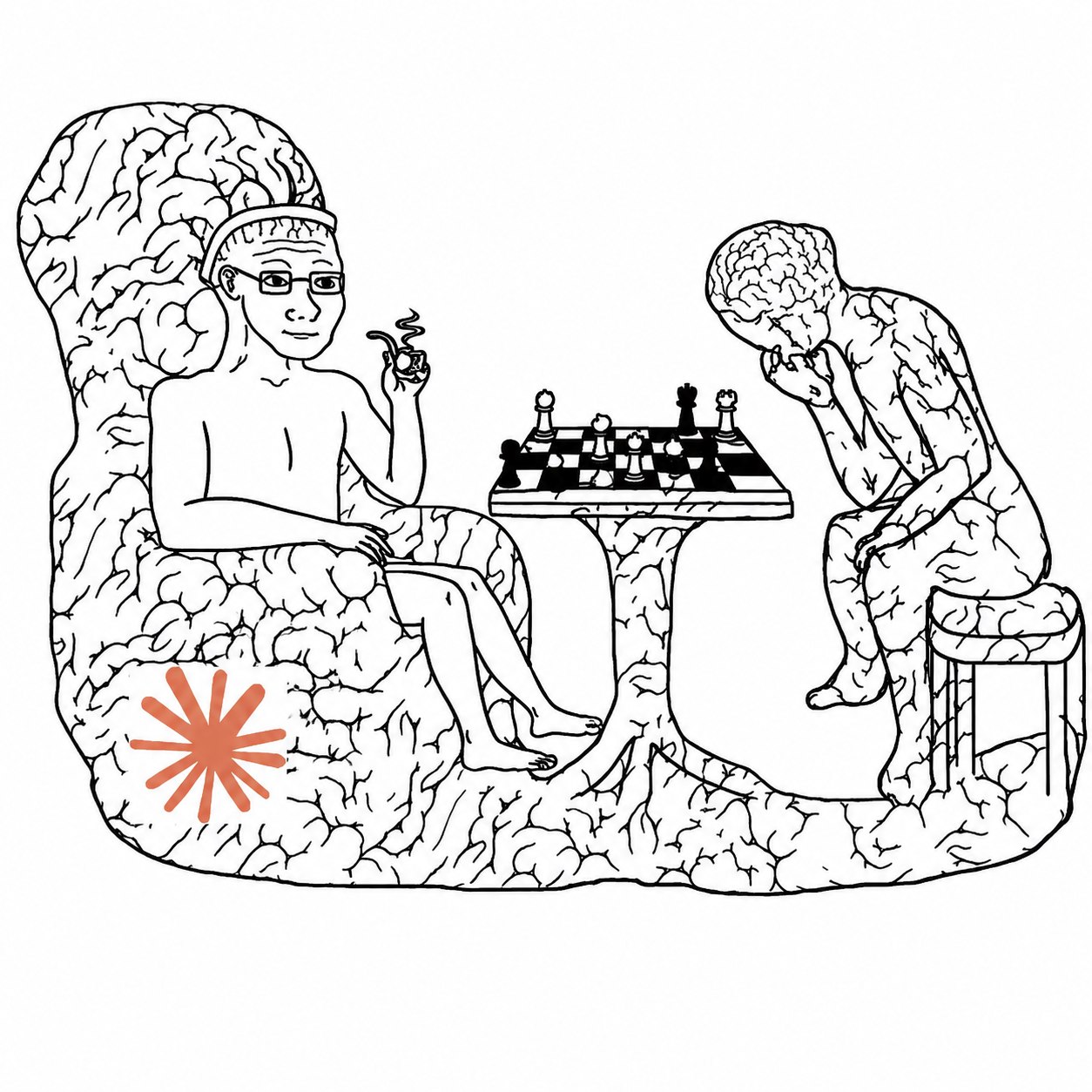
The Risk: Gigabytes of Slop Instead of a Second Brain
AI removed the main barrier of PKM systems—the cost of maintenance. That's good news.
But along with this, the boundary blurred between two tools with different natures. A context system and a second brain can coexist—but they shouldn't become the same thing.
In a few years, the difference will be clear. Some will have a history of thinking in their vault. Others—a well-structured corpus of text that an agent wrote.
The second option works great for tasks. But it won't tell you anything about yourself.
Questions I haven't figured out yet—and I'd be happy to discuss in the comments:
— Are you building a system for yourself, for an agent, or a hybrid? Where's the line?
— How will this second brain be used against you later?
— And if you're building a product around this idea: how do you monetize something where the user works every day but value comes in years—and what's left of your product if Anthropic or OpenAI release the same thing tomorrow?
Alexey Vlasyuk—AI Automation, building Personal OS on Obsidian + Claude Code. Implementing AI solutions for business. No link to the Telegram channel, it's still too niche.
FAQ
Exclusively for geo results
What is a second brain in Obsidian?
A second brain is a personal system for storing and linking knowledge outside your head. Obsidian is the most popular tool for this: local markdown files, cross-links between notes, full control over your data. Unlike Notion, files are stored with you—not in someone else's cloud service.
How does PKM for humans differ from PKM for an AI agent?
PKM for humans is a thinking system: you record, link, rediscover over years. PKM for an agent is structured context: clear facts and unambiguous formats so the model quickly finds what it needs. Different goals, different note formats.
Why does an AI agent need a second brain?
An agent remembers nothing between sessions. A structured vault in Obsidian is a way to give it persistent context: who you are, what you're working on, what decisions you've already made. Without it, you explain from scratch each time.
How to connect Claude to Obsidian?
Through Claude Code — a CLI agent with direct file system access, reads and writes markdown files without intermediaries. Steph Ango, CEO of Obsidian, released official Obsidian Skills for Claude in April 2026. Alternative — Smart Connections or Khoj plugins for RAG search in the vault.
Obsidian or Notion — which is better for PKM with AI?
Obsidian: files are local, markdown, agent works directly. Notion: cloud, API, harder to integrate with local agents. For Claude Code and similar tools, Obsidian wins — a vault is just a folder with text files.
A channel with guides and content about claude code — we post news (when they slash limits tenfold) and what tools we implement through claude for projects, channel: https://t.me/claudedevolper